![25_PMX Logo.jpg]](https://help.portfoliometrix.com/hs-fs/hubfs/25_PMX%20Logo.jpg?height=40&name=25_PMX%20Logo.jpg)
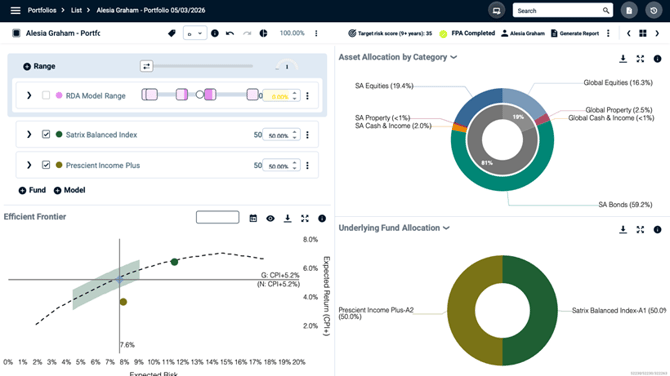
- This is a classic example of portfolio diversification and correlation effects.
- When blending two funds, the portfolio’s risk and return do not move linearly between them due to the correlation and diversification effects.
- The way the underlying holdings of the two portfolios interact can result in improved risk-adjusted outcomes:
- In other words, since the underlying assets do not move perfectly in sync, their interactions can reduce overall volatility and improve the consistency of returns, leading to better risk-adjusted outcomes.
- Consequently, a combined portfolio may deliver more return for less risk than a simple weighted average would suggest—illustrating the fundamental principle that diversification enhances efficiency.
- As is often said:
-
- The whole can be greater than the sum of its parts.
-
- Diversification is the only free lunch in investing.